
Global Alliance Africa at Innovate UK KTN collaborates with prominent structures to improve South Africa’s Intellectual Property Rights Act
Global Alliance Africa hosted three international knowledge-sharing workshops on IPR to support the National Intellectual Property Management Office (NIPMO) in South Africa.
Clive Bonny Sustaining enterprise growth with stakeholder partnering, ESG environment social governance standards, IP protection and access to finance.
It was a real pleasure to be actively involved with this top level knowledge sharing project. UK KTN created benchmark processes which enabled international IP policy makers to accelerate IP developments
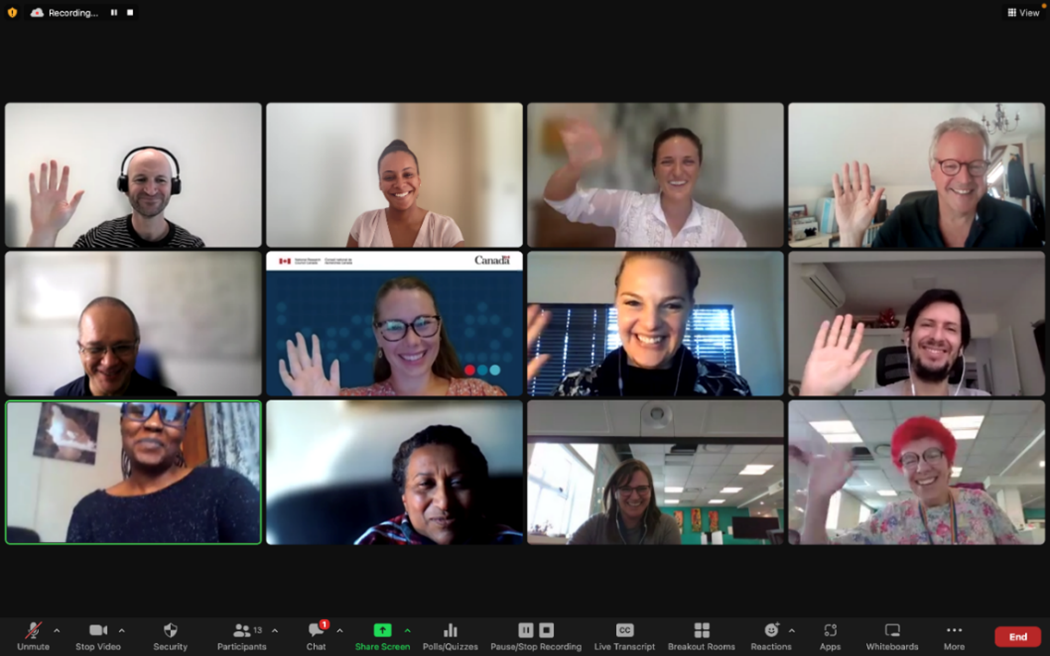
Below top right is Clive Bonny UK IP advisor, workshops facilitator and report .
Hi Clive,
Thank you so much. It has been a pleasure working with you (and learning from you!). You have helped us navigate a very foreign sphere and produce a high-quality product. You also kept the workshops both productive and engaging. Thank you! Please see attached final formatted report. Thank you again for all your work – Jetane is very pleased and is passing it on to her execs.
This useful feedback is also very appreciated. Wishing you all the best.
South Africa national government recognising the need to develop an enabling Intellectual Property (IP) environment, as well as the role this plays in promoting innovation, technology transfer, research and development, creative expression, consumer protection, industrial development, and more broadly, economic growth.
In August 2022, Global Alliance Africa took its first steps towards collaborating with South African policy makers to realise such an environment, and – together with the country’s National Intellectual Property Management Office (NIPMO), the UK Foreign Commonwealth and Development Office (FCDO), and the World Bank Group – the project hosted three international knowledge-sharing workshops, to support NIPMO and its efforts to advance the country’s Intellectual Property Rights & Publicly Funded Research and Development (IPR-PFRD) Act.
The IPR-PFRD Act governs all IP developed during any research activity that received public funding. More importantly, it is a key mechanism used to protect and commercialise any such IP with the potential to create social and/or economic value for the benefit of the South Africa people.
NIPMO’s revision of the IPR-PFRD Act comes as the body seeks to ensure that national policy is on-par with global frameworks of a similar nature. To this end, these workshops facilitated cross-learning and sharing of international best practices to support, where appropriate, the organisation’s efforts.
According to the Project Director of Global Alliance Africa, Dr Nee-Joo Teh, the workshops engaged experts from across the United Kingdom, South Africa and selected countries (including Brazil, Canada, Singapore and Kenya). Together, they discussed lessons learnt, shared insights relating to IPR best practices, and helped identify policy initiatives suitable to address South Africa’s unique challenges.
Among the participants to the two-hour workshops were Ganesh Rasagam (Practice Manager for East Asia and Pacific: Finance, Competitiveness & Innovation at the World Bank); Jetane Charsley (Head, NIPMO – South Africa); Erica Fraser (Leader- Intellectual Property, National Research Council of Canada); Winnie Chua (Director Intellectual Property Unit, Enterprise Division, Agency for Science, Technology, and Research- Singapore); Osorio Coelho Guimaraes Neto (Deputy Coordinator of Mechanisms of Research, Development and Innovation Support, Secretariat of Entrepreneurship and Innovation in the Ministry of Science, Technology and Innovation- Brazil); and Christian Zian (Head of Technology Transfer, University of Saint Andrews- UK).
In conclusion, Teh says: Behind all Global Alliance Africa projects and initiatives is a mission to drive knowledge transfer and encourage meaningful collaboration in the field of African innovation. These workshops were proof that there is power in forming such partnerships, and that by working together across cultures and borders, we can find new and improved ways of working, and explore how other people’s experiences may present solutions to the challenges of our own.